
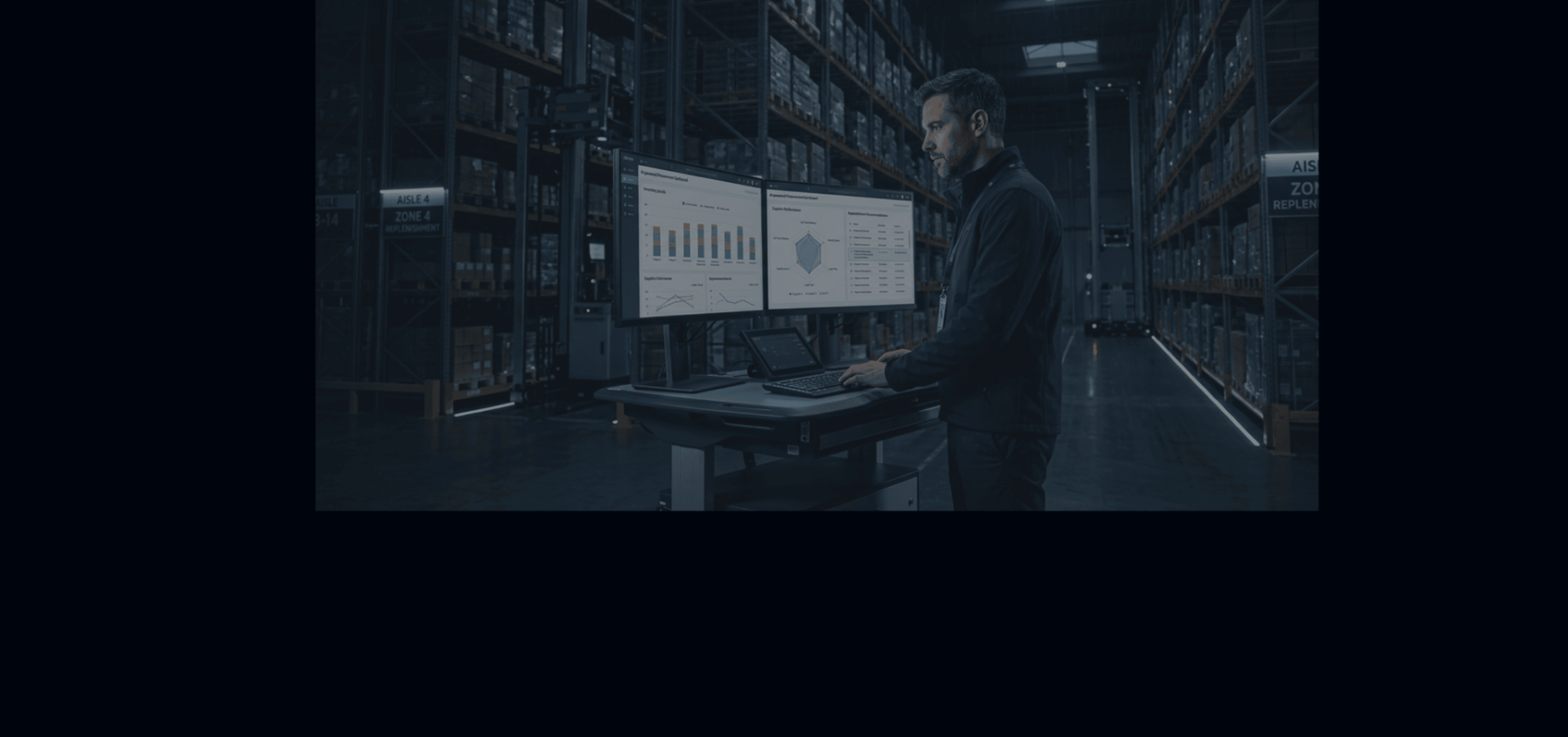
Artificial intelligence is rapidly becoming part of procurement and inventory management. AI-powered tools can analyze large amounts of data, identify patterns, forecast demand, monitor supplier performance, and recommend when and how much to order.
But there is an important distinction:
AI is not a substitute for procurement strategy, reliable data, effective processes, or experienced professionals. It is a tool that can help organizations work more efficiently when it is integrated into a sound operating model.
The real question is therefore not whether AI will replace procurement. It is how procurement teams can use AI to make faster, better-informed, and more consistent decisions while keeping human judgment at the center.
What Is AI in Procurement?
AI in procurement refers to the use of technologies such as machine learning, predictive analytics, natural-language processing, and intelligent automation across procurement activities.
These tools can support teams by processing information that would be difficult or time-consuming to analyze manually. Depending on the organization’s needs and digital maturity, AI may be used to:
- Analyze historical purchasing and consumption data
- Forecast demand for materials or products
- Recommend replenishment quantities and timing
- Identify unusual spending or inventory movements
- Monitor supplier performance and potential risks
- Compare quotations, contracts, and purchasing patterns
- Simulate the effect of different sourcing or inventory decisions
- Automate repetitive administrative tasks
This can give procurement professionals faster access to relevant insights. However, the quality of the recommendation still depends on the quality of the data, assumptions, rules, and processes behind it.
Inventory is where procurement decisions become financially visible. Ordering too much can increase carrying costs, waste, markdowns, and obsolescence. Ordering too little can cause stockouts, production delays, emergency purchases, and lost sales.
AI-powered inventory management tools can help teams manage this balance more effectively.
1. More Responsive Demand Forecasting
Traditional forecasts often rely heavily on historical averages and periodic reviews. AI models can examine larger and more varied datasets, including sales patterns, seasonality, promotions, lead times, and external market signals.
This does not make demand perfectly predictable. It can, however, help procurement and planning teams detect changing patterns earlier and revise forecasts more frequently.
Better forecasts can support more informed purchasing decisions and reduce the risk of both excess stock and shortages.
2. Smarter Replenishment Recommendations
AI can continuously assess stock levels, expected demand, supplier lead times, service targets, and existing orders. It can then recommend what to order, when to order it, and in what quantity.
These recommendations may help reduce manual calculations and allow buyers to focus their attention on exceptions, critical items, and higher-value decisions.
Still, a recommendation should not automatically become a purchase order. Procurement professionals must consider factors the system may not fully understand, such as supplier relationships, upcoming negotiations, cash constraints, contractual commitments, and operational priorities.
3. Earlier Identification of Inventory Risks
AI tools can flag patterns that may otherwise remain hidden inside spreadsheets or disconnected systems. These can include:
- Slow-moving or obsolete stock
- Unusual consumption
- Repeated emergency orders
- Potential stockouts
- Excess safety stock
- Changes in supplier lead-time reliability
- Gaps between forecast demand and actual usage
Earlier visibility gives teams more time to investigate and act. The value is not merely in receiving an alert; it is in understanding the cause and choosing the right response.
4. Better Supplier Monitoring
Supplier performance directly affects inventory availability. Late deliveries, inconsistent quality, incomplete orders, or sudden changes in lead time can disrupt even a well-designed inventory plan.
AI can help procurement teams monitor supplier data, detect performance trends, and identify emerging risks. It may also suggest alternative suppliers or sourcing scenarios when disruption is likely.
The final decision, however, still requires commercial judgment. A supplier cannot be evaluated through price and delivery data alone. Quality, strategic importance, responsiveness, contractual conditions, and long-term partnership value also matter.
5. Faster Scenario Analysis
Procurement teams regularly face questions with no simple answer:
- What happens if demand increases unexpectedly?
- How will a longer supplier lead time affect availability?
- Should the company place a larger order to secure a discount?
- What inventory should be prioritized when working capital is limited?
AI-supported tools can evaluate multiple scenarios more quickly and show their possible impact on service levels, cost, and inventory. This enables teams to compare options before committing resources.
The promise of AI can create a dangerous assumption: once the technology is implemented, procurement performance will automatically improve.
That is rarely the case.
Poor Data Produces Poor Recommendations
If item codes are duplicated, lead times are outdated, inventory records are inaccurate, or historical demand is distorted, AI will analyze an unreliable picture of the business.
Before investing heavily in advanced tools, organizations must strengthen data governance and establish clear ownership of procurement and inventory information.
Weak Processes Cannot Be Fixed by Automation
AI can make an existing process faster, but speed is not always improvement. Automating unclear approval flows, inconsistent purchasing practices, or poorly designed replenishment rules can spread errors more efficiently.
Organizations should first clarify their procurement policies, roles, decision rights, performance measures, and exception-management processes.
Context Still Requires Human Judgment
Algorithms work with available data and programmed objectives. Procurement professionals work with business context.
A system may recommend the lowest-cost supplier, while a buyer knows that the supplier has become less responsive. It may suggest reducing safety stock, while the operations team knows that a critical shutdown is approaching. It may forecast demand from historical behavior, while the commercial team is preparing a major promotion.
AI can strengthen judgment by organizing evidence and presenting options. It should not remove accountability from the people responsible for the decision.
Efficiency Is Not the Same as Effectiveness
Processing orders faster or automating reports can save time. But procurement effectiveness also includes value creation, resilience, quality, stakeholder alignment, ethical sourcing, negotiation, and supplier development.
The best use of AI is not to reduce procurement to a faster transaction engine. It is to give professionals more time and better information for strategic work.
Organizations do not need to automate the entire procurement function at once. A more effective approach is to begin with a clearly defined business problem.
Step 1: Identify the Decision That Needs Improvement
Start with a specific question, such as reducing stockouts, improving forecast accuracy, controlling excess inventory, or monitoring supplier delays.
Step 2: Assess Data Readiness
Review the accuracy, completeness, consistency, and accessibility of relevant data. Determine who owns it and how often it is updated.
Step 3: Define Human Oversight
Establish which recommendations can be automated, which require approval, and which must remain fully human-led. Assign clear accountability for decisions and exceptions.
Step 4: Pilot a Focused Use Case
Test the tool on a selected category, product group, supplier set, or location. Compare the results with current methods and measure the operational and financial impact.
Step 5: Track the Right Performance Indicators
Relevant KPIs may include:
- Forecast accuracy
- Stockout rate
- Inventory turnover
- Days of inventory on hand
- Excess and obsolete inventory
- Supplier on-time delivery
- Purchase-order cycle time
- Emergency purchase frequency
- Working-capital impact
Step 6: Improve the Process Continuously
AI models, business conditions, and data all change. Recommendations should be reviewed regularly, and users should be able to challenge outputs, correct errors, and improve decision rules.
AI can help procurement teams see patterns sooner, process information faster, and manage inventory with greater precision. It can support demand forecasting, replenishment, supplier monitoring, risk detection, and scenario planning.
But technology creates value only when it is supported by accurate data, clear processes, capable people, and a defined strategy.
The strongest procurement functions will not be those that hand every decision to an algorithm. They will be those that combine technological speed with commercial experience, operational understanding, and accountable human judgment.
AI is not the procurement solution by itself. Used well, it is a powerful contributor to procurement efficiency.
Saber Middle East helps organizations strengthen procurement, inventory management, and supply chain performance through practical training and consulting solutions. We support teams in assessing their current processes, improving decision-making frameworks, building internal capabilities, and integrating technology where it creates measurable business value.
If your organization is exploring AI in procurement or looking to improve inventory efficiency, contact Saber Middle East to discuss the right starting point for your business.
How To Face The Inevitable
What Results Can Inventory Optimization Deliver for Your Business?